Cooking Brazilian favourites with local ingredients abroad
One of the quiet hardships of living abroad is missing the food you grew up with. The good news: the heart of Brazilian home cooking — rice, beans, simple seasonings, slow-cooked comfort — travels better than you think.
8 min read
Feijão: easier than you fear
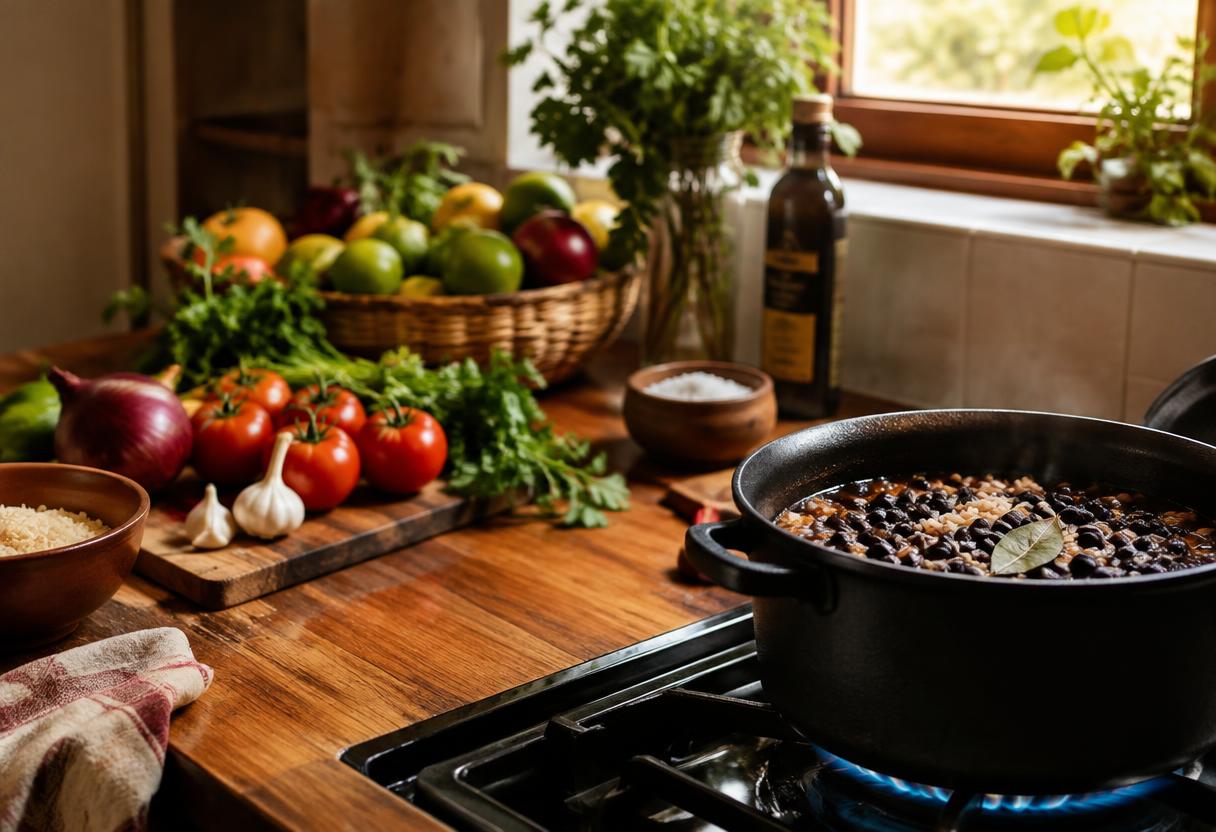
Black beans (feijão preto) are available in most large supermarkets in the UK, US, Canada, Australia and across Europe — look in the world foods aisle, Latin American shops or online. Canned black beans work well for a weeknight version; dried beans soaked overnight give the deepest flavour.
If black beans are hard to find, pinto beans make a lovely carioca-style feijão, and even kidney beans produce a satisfying pot. The soul of the dish is the sofrito: onion, garlic, a bay leaf and patience.
Everyday swaps that work
You do not need a Brazilian shop for most recipes. These substitutions are used by Brazilian home cooks all over the world:
- Couve (collard greens) → kale, spring greens or thinly sliced cabbage, sautéed with garlic.
- Mandioca (cassava) → look for frozen cassava in international freezers, or use potatoes in stews where cassava would go.
- Queijo minas → a mild feta or fresh mozzarella comes close in salads and on top of beans.
- Polvilho for pão de queijo → tapioca starch is widely sold in Asian supermarkets and health food shops.
- Cachaça for feijoada sides and marinades → a squeeze of lime and a pinch of sugar gives a similar brightness in most savoury uses.
Rice the Brazilian way
Brazilian-style rice — sautéed with garlic and onion before the water goes in — works with any long-grain rice. Fry a crushed garlic clove and a little diced onion in oil, add the rice, stir for a minute, then add hot water and salt. It turns an ordinary side into the taste of a Sunday lunch.
Find your local Brazilian community
Almost every city with a Brazilian community has at least one shop or market stall selling guaraná, farofa, goiabada and polvilho. Search for 'Brazilian shop' or 'mercado brasileiro' plus your city, or ask in local Brazilian community groups online — newcomers are always pointed to the good addresses.
These shops are also where you will hear Portuguese spoken, find out about community events and feel a little closer to home. The food is the excuse; the connection is the real ingredient.
Cook the memory, not the museum
Recipes adapt, and that is not a betrayal — it is what immigrant kitchens have always done. Your feijão with local beans, your couve made with kale, your Sunday lunch with whatever the season offers: it is still yours, and it still tastes like home.
4 November 2026 · Published by the AttivaGo team.