How to read food labels in a new country
Moving abroad means relearning something you used to do on autopilot: understanding what is in your food. The good news is that labels follow similar logic almost everywhere — once you know where to look.
7 min read
Start with the serving information
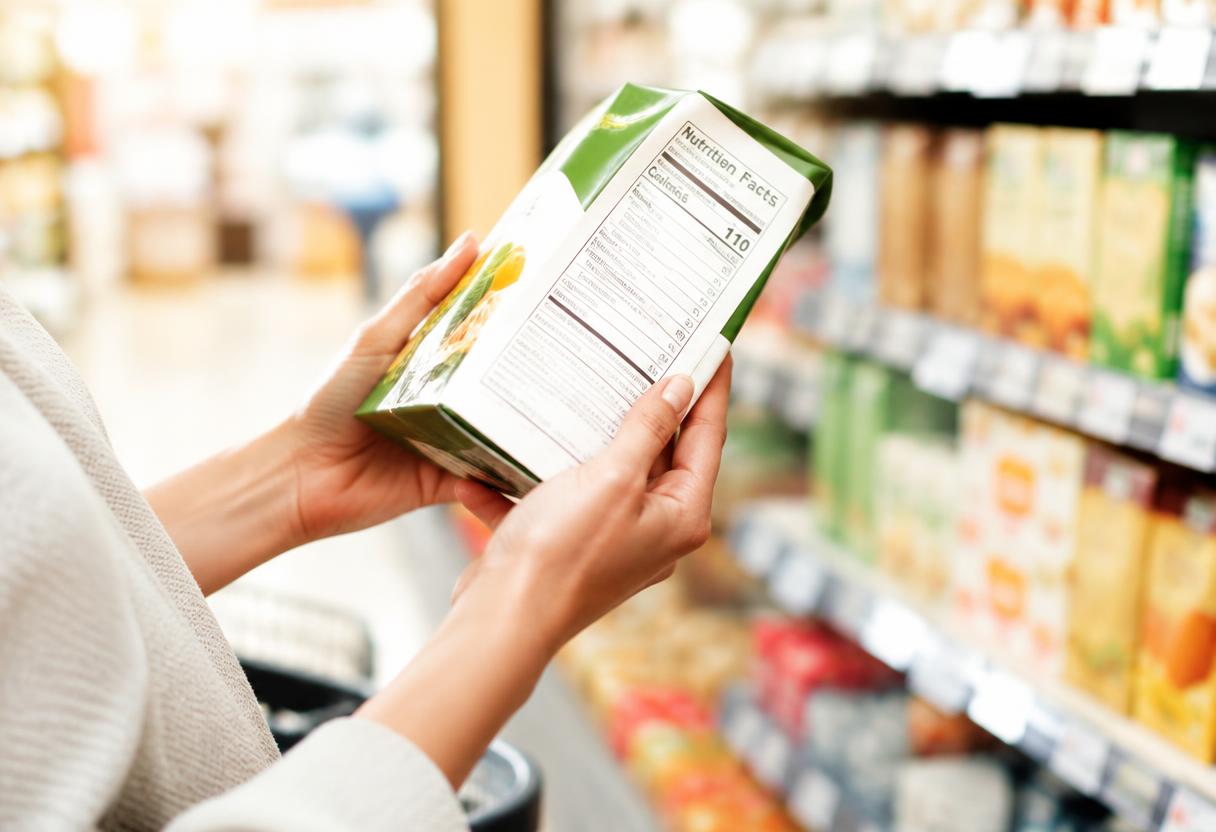
Almost every nutrition panel in the world is built around a reference amount: per 100 grams, per 100 millilitres or per serving. Before comparing two products, check that the reference amounts match. A biscuit that looks lighter than another may simply use a smaller serving size.
The per-100g column is your best friend abroad. It lets you compare products fairly even when the brands, languages and packaging styles are completely unfamiliar.
The four numbers worth finding first
You do not need to understand every row of a label. In most countries, four values tell you most of what you need for everyday decisions:
- Energy (kcal or kJ): how much energy a portion provides. Useful for comparing similar products.
- Sugar: often listed as 'of which sugars' under carbohydrates. Lower is usually the easier everyday choice for drinks, cereals and snacks.
- Salt or sodium: many countries list salt per 100g. As a rough guide used by the UK NHS, more than 1.5g of salt per 100g is considered high.
- Fibre: not always listed, but when it is, higher-fibre options tend to keep you satisfied for longer.
Learn ten words in the local language
You do not need to be fluent to shop well. Learning the local words for sugar, salt, fat, protein, fibre, milk, eggs, nuts, wheat and soya covers most of what appears on a label — including the allergen information that matters most if you or your family have allergies.
In the European Union and the UK, the most common allergens must be emphasised in the ingredient list, usually in bold. In other countries the rules differ, so when in doubt, ask staff or choose products with clear labelling.
Front-of-pack claims: helpful, but read the back
Words like 'natural', 'light' or 'source of protein' are marketing as much as information. Some countries add colour-coded labels on the front — such as the traffic-light system used on many UK products — which can be a genuinely useful shortcut.
Whatever the front says, the ingredient list on the back tells the real story. Ingredients are listed in order of quantity, so if sugar appears in the first three positions, the product is mostly sugar, whatever the front claims.
Give yourself a few weeks
The first few shops in a new country take longer. That is normal. Pick two or three products you buy every week, learn their labels properly, and let the rest come gradually. Within a month, the supermarket starts to feel like yours.
3 November 2026 · Published by the AttivaGo team.