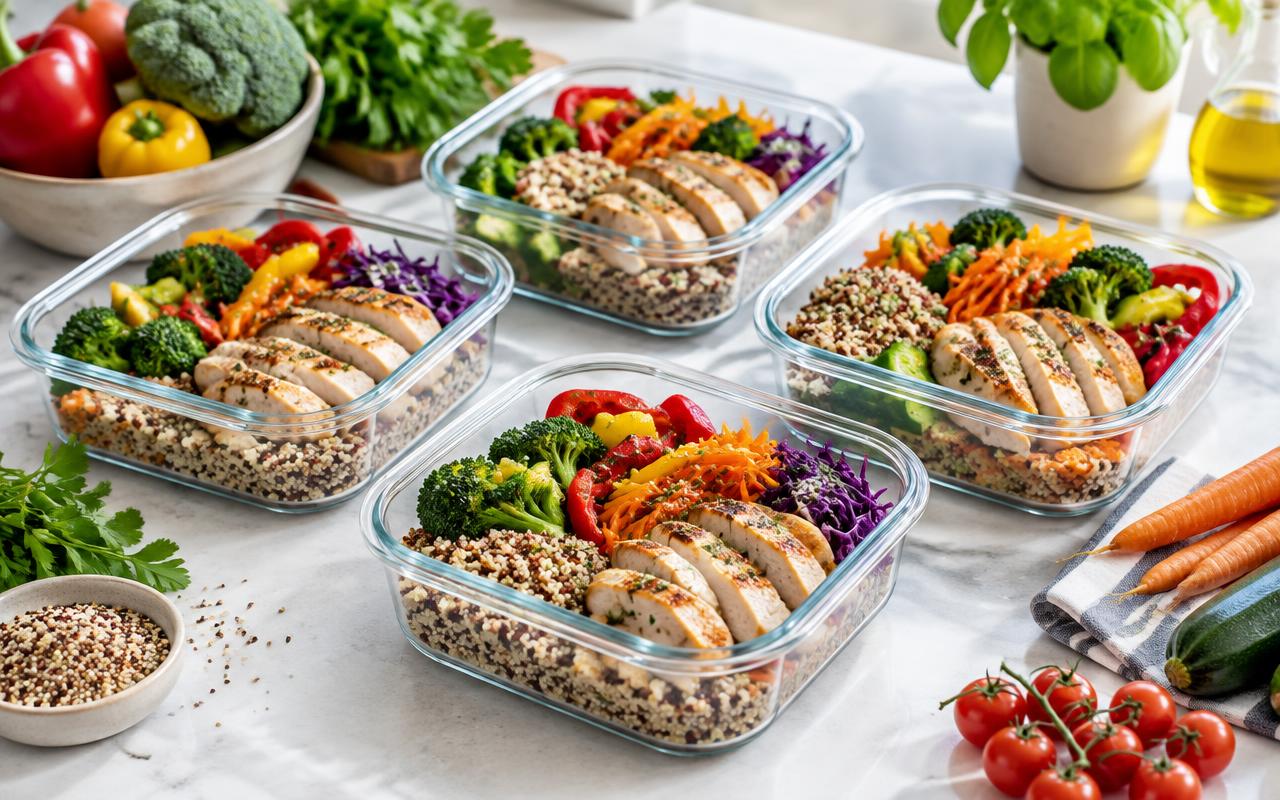
Meal prep basics for busy weekdays
Meal prep has a reputation for rows of identical containers and strict plans. In real life, it works best as a small habit: prepare a few building blocks, and let the week assemble itself.
7 min read
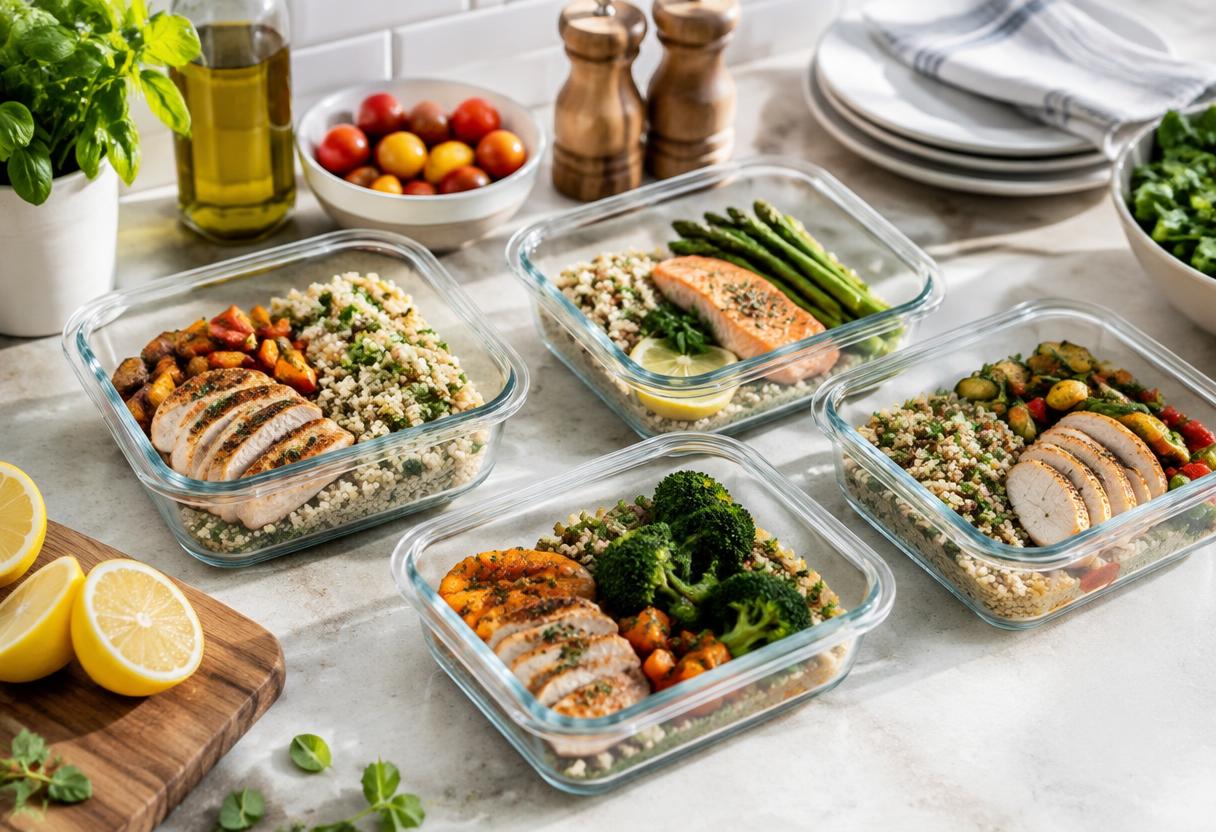
Think building blocks, not finished meals
The most sustainable form of meal prep is preparing components rather than complete dishes. Cook one grain, one protein and one tray of vegetables, and you can assemble different meals all week — bowls, wraps, salads, quick stir-fries — without eating the same thing twice.
- A grain: rice, quinoa, couscous or roasted potatoes.
- A protein: baked chicken, boiled eggs, baked fish, beans, lentils or tofu.
- A tray of roasted vegetables: whatever is in season and on offer.
- A sauce or dressing: olive oil and lemon, a yogurt-herb mix or a simple vinaigrette.
One hour, one session
Set a timer for one hour. Put the grain on the stove, the vegetables and protein in the oven, and wash salad leaves while things cook. When the timer ends, everything cools while you clean up. That single hour covers three to four weekday lunches or dinners.
Store it safely
Let food cool before closing containers, refrigerate within two hours of cooking, and keep the fridge at 5°C or below. Most cooked grains, proteins and roasted vegetables keep well for three to four days in the fridge. When in doubt, freeze portions on the day you cook them — the UK Food Standards Agency has clear, practical guidance on chilling and freezing.
Food Standards Agency — Chilling and freezing foodKeep it flexible
Meal prep fails when it becomes a prison. Plan for three or four days, not seven. Leave room for a dinner with friends, a takeaway craving or a tired evening. The goal is to make the easy choice a good one — most of the time, not all of the time.
6 November 2026 · Published by the AttivaGo team.